

If you’ve got a glass cooktop, you know the anxiety. Looks incredibly clean, terrible the second something boils over. And every instinct — scrub harder, use something abrasive — will scratch it. The house cleaning services Austin homeowners trust us for include a lot of cooktop work. The trick isn’t force. It’s chemistry and patience.
Do You Want to Order the Cleaning?

What Scratches Glass Stove Tops (and What Doesn’t)
Let’s get this out of the way.
These will scratch your cooktop:
✖ Steel wool and SOS pads — one use, surface destroyed
✖ Green side of a kitchen sponge — seems harmless, isn’t
✖ Powder cleansers like Comet or Ajax
✖ Cast iron dragged across the surface (lift, don’t slide)
✖ Aluminum foil on a hot burner — melts and fuses to glass
Safe to use:
✔ Soft microfiber cloths
✔ Non-scratch sponges (blue or white — never green)
✔ Razor blade scrapers at 45 degrees
✔ Baking soda paste
✔ Cerama Bryte or Weiman cooktop cleaner
✔ White vinegar spray
PRO TIP:
When we train new crew members, the rule is simple — if you wouldn’t rub it on your sunglasses, don’t rub it on a glass stove top. That mental shortcut has prevented every scratch since.
Daily Wipe-Down — the Habit That Prevents Everything
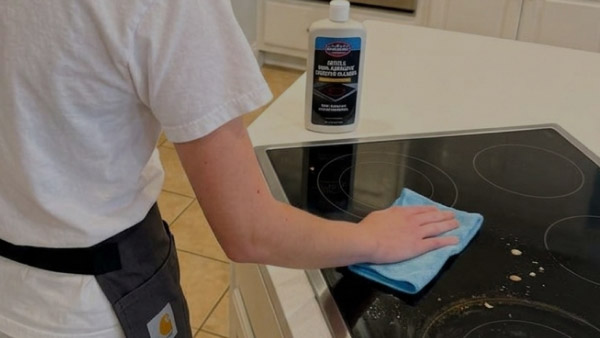
We tell every client the same thing: wipe the cooktop after every time you cook. Not tomorrow. When it’s still slightly warm — warm enough that a damp cloth loosens fresh splatters, cool enough to touch safely.
RECIPE: Damp microfiber cloth. Maybe a drop of Dawn if something greasy splattered. Thirty seconds.
This habit is why some cooktops look brand new after five years and others look like a battlefield after six months. Fresh splatters wipe off. Baked-on splatters reheated forty times? Full treatment below.
PRO TIP:
Keep a dedicated microfiber cloth folded next to the stove. If it’s within arm’s reach, you’ll actually use it. If it’s in a drawer across the kitchen, you won’t.
Stove Top Deep Clean — Our Actual Process
Step one: Let the cooktop cool, then scrape.
Razor blade scraper made for ceramic glass — $4-$6 at Home Depot or HEB — held flat at 45 degrees. Always wet the glass first. Dry scraping can leave micro-scratches. We wet, then scrape. This removes the thick burnt-on chunks that no soaking will dissolve.
PRO TIP:
Never use the corner of the blade. Flat edge only. And replace the blade when it gets nicked — a damaged razor blade will gouge glass.
Step two: Baking soda paste.
Half a cup of baking soda, enough water for a thick paste. Spread over the entire surface — clean areas benefit from a light polish too. We lay a hot damp towel on top. Wring a kitchen towel in hot water, drape it over the paste, leave twenty minutes. Heat and moisture help baking soda penetrate burnt residue.
Step three: Wipe and scrub.
Non-scratch sponge, work the baking soda into remaining stains. Circular motions, moderate pressure. Rinse the sponge frequently. Wipe everything off with a clean damp cloth.
Step four: Vinegar spray.
Mist the whole surface — it reacts with baking soda residue, fizzes slightly, dissolves the haze baking soda sometimes leaves. Wipe with microfiber. Buff dry with a second cloth. The surface should look dark, glossy, streak-free.
If you have any questions, call now to receive a free estimate and phone consultation.
Burnt Sugar and Melted Plastic — the Worst Cases
Burnt sugar is a nightmare scenario. A client in Pflugerville last year boiled over sugar syrup — by the time she got to it, caramelized sugar had hardened onto the glass like amber concrete. Normal cleaning didn’t touch it.
For burnt sugar: hot wet towels on the spot for thirty minutes to soften, then razor blade at 45 degrees. Go slow – sugar comes off in sheets once soft. Don’t pry at cold hardened sugar — that’s how people chip glass.
PRO TIP:
For burnt sugar, turn the burner back on low for thirty seconds. Just enough to re-soften it. Turn off, let it cool to warm, scrape. Way easier than fighting cold hardened caramel.
Melted plastic is the other disaster. Grocery bag on a hot burner, plastic lid falls onto the surface.
Fix: let it cool and harden, scrape carefully with a razor blade. Residue after scraping? Dab of acetone (nail polish remover) on a cloth, wipe quickly. Don’t let acetone sit on the surface long.
Products We Actually Use vs. Products We Don’t
After testing everything over the years:
What we avoid:
✖ Windex or ammonia glass cleaners — streaks, doesn’t cut grease
✖ Bleach — permanently discolors the surface
✖ Oven cleaner — way too harsh
✖ Generic all-purpose cleaners — leave residue that smokes next time you cook
What works:
✔ Cerama Bryte cooktop cleaner — our go-to, about $4
✔ Weiman Glass Cook Top Cleaner — good for polishing
✔ Bar Keepers Friend Soft Cleanser — for stubborn stains
✔ Baking soda paste — cheap, effective, zero risk
✔ White vinegar — finishing spray
White Haze Marks That Won’t Come Off
We get asked about these constantly. Faded white spots or cloudy rings around the burners. Usually mineral deposits — Austin’s hard water pots boil over, water evaporates on hot glass, minerals bake into the surface at 400 degrees.
How to clean it: Vinegar soak handles most of it — spray, fifteen minutes, wipe. For stubborn marks, Cerama Bryte with a non-scratch pad gets them near-invisible. Honest truth: some old hard water discoloration is permanent etching. Minerals have altered the glass. At that point, live with it or replace it.
PRO TIP:
Wipe up boil-overs immediately, even while cooking. Use a damp cloth carefully near heat to get water off the glass before it evaporates and bakes minerals into the surface.
When to Let the Pros Handle It
Most glass cooktop cleaning is DIY. But we get called in for the past-home-remedy stage — years of neglect, heavy carbon, or someone who tried steel wool and needs the surface polished to minimize scratches. That’s what cleaning services Austin residents call on us for.
GoDucky Cleaning Services does kitchen deep cleans daily. We bring the right scrapers and products for every cooktop brand — Samsung, Whirlpool, GE, Bosch, KitchenAid, Frigidaire.
If you’re researching cleaning services Austin prices, our website includes a detailed breakdown of local cleaning costs, including real pricing examples.
If you’d rather get an exact estimate for your home, feel free to call us for a personalized quote based on your cleaning needs.
Bottom Line
Glass cooktops reward daily attention and punish neglect. Thirty-second wipe after cooking is the entire secret. When things build up, baking soda paste and a razor blade handle 90% of situations. The other 10% is burnt sugar, melted plastic, and mineral etching — all fixable with the right approach. Keep anything abrasive far away and your cooktop outlasts the rest of the kitchen.
Name: GoDucky Cleaning Services
Adress: 2300 Via Cordova Ct, Austin, TX 78732
Phone: (512) 222-3784
Website: https://goducky.us/
