

Here’s something we do at GoDucky Cleaning Services that freaks out new clients. First walkthrough — somebody runs a finger along the top edge of the cabinet next to the range. Not the door face. The top, where nobody looks. What comes off is always yellowish-brown. Light stickiness? A couple of months. Finger glues to the surface? A year minimum. We once peeled off a layer in a Tarrytown kitchen with the consistency of old candle wax. The homeowner had no idea.
Cabinet grease is the thing nobody cleans until the in-laws visit.
As Austin home cleaning service providers, we see it all the time — spotless counters, mopped floor, and then your hand sticks to the cabinet door. Every cook session sends invisible oil mist onto surfaces within ten feet. Dust sticks. More oil lands on the dust. Couple months of that and you’ve got a tacky brownish coating that soap and a paper towel won’t touch.
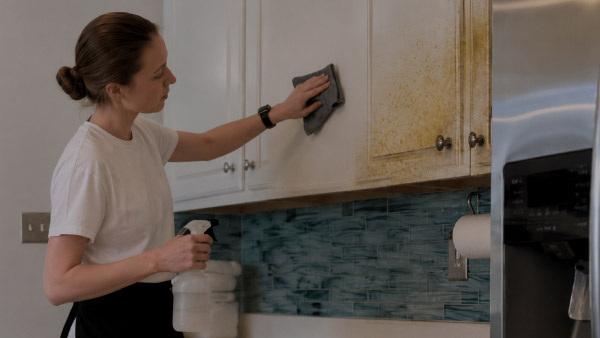
We’ve thrown everything at kitchen cabinets over the years.
What follows are the five approaches that actually get the grease off — ranked mild to aggressive.
Try them in order.
Do You Want to Order the Cleaning?

Before You Start: Know Your Cabinet Finish
Quick thing before we get into the methods — not all cabinets react the same way to cleaners. Stuff that’s totally fine on painted surfaces will wreck a shellac finish. Matters a lot, and most guides skip this part:
- Painted cabinets — most forgiving by far, safe with all five methods.
- Stained and sealed wood — steer clear of harsh alkaline products, always spot test.
- Laminate — can take moisture but don’t scrub with anything gritty.
- Unfinished wood — damp cloth and that’s about it, liquid pooling on bare wood is asking for trouble.
PRO TIP:
Open one of the cabinet doors, find a spot on the inside that nobody’ll see, and test your cleaner there. Give it five minutes. No dullness, no weird color change? Go ahead with the rest.
Method 1: Dish Soap and Warm Water
Where you start. Handles about 60% of what we see on regular maintenance visits.
- Four drops of Dawn into warm water.
- Microfiber cloth, dunked and wrung till just damp.
- Go with the grain on wood.
- Dawn’s surfactants break grease apart and pull it off.
- One soapy wipe, one clean damp wipe to chase the soap, then dry immediately.
That last part matters. Soapy water sitting in cabinet seams for twenty minutes swells wood and warps panels.
Method 2: Vinegar and Water Solution
When soap leaves a tacky feel behind, vinegar finishes the job.
- Half vinegar, half warm water, spray bottle. Mist the cloth, not the cabinet.
- Spray cloth, wipe cabinet, rinse cloth, second wipe, dry.
Know that vinegar slowly dulls lacquer and shellac with repeated use. Good monthly, but bad daily.
PRO TIP:
Microwave the vinegar thirty seconds before mixing. Warm acid dissolves grease faster — figured this out cleaning shower glass years ago. Same principle on cabinets.
Method 3: Baking Soda Paste
The stuff surviving soap and vinegar lives around handles and right above the range.
- Two tablespoons baking soda, water to toothpaste thickness.
- Soft cloth, small circles. Baking soda’s gentle enough to break the grease bond without scratching.
- Stubborn patches — let the paste sit for five minutes.
PRO TIP:
Test on dark-stained wood first. Baking soda leaves white residue in the grain — looks like dandruff on your cabinets and it’s a pain to get out.
Method 4: Oil-Based Cleaner (Grease Fights Grease)
The one that makes people look at us like we’re crazy. More oil on greasy cabinets? Yeah — grease dissolves grease. Like dissolves like.
- Dab of vegetable oil on a microfiber cloth, rub into the sticky spot. You’ll feel old buildup melt under your fingers.
- Then immediately wipe with dish soap to strip the oil off — skip this step and you’ve just traded old grease for new.
We grab this on stained wood where vinegar feels risky. Cleans and feeds the finish at once.
PRO TIP:
Murphy’s Oil Soap is basically this method in a bottle. Oil and soap pre-mixed. Dilute per label, cloth on, wipe off. We keep a bottle on every van for wood cabinet jobs.
Method 5: Commercial Degreaser
Last resort. Years of buildup, nothing else working. What we’ve had luck with:
- Krud Kutter — water-based, biodegradable, about $5 at HEB. Our default.
- Zep Heavy-Duty Citrus — hits harder, fills the house with smell
- Ecolab Heavy-Duty Citrus — pro grade, under $6.
Cloth, not cabinet. Wipe into the grease, sixty seconds on bad spots, wipe clean, dry. These strip wax and finishes if left sitting. On, wait, off. Don’t wander away.
PRO TIP:
Follow commercial degreasers with Howard Feed-N-Wax on wood. The degreaser pulls natural oils out alongside the kitchen grease — bare dry wood cracks.
The Spots Everybody Misses
On a deep clean, our crew hits places that don’t occur to most people until we point them out:
- Cabinet tops — worst grease trap in any kitchen. Nobody sees them. Thick sticky dust, sometimes a quarter-inch.
- Underside of upper cabinets above the range — steam coats this surface daily.
- Around handles — finger oils build into a dark ring.
- Inside hinges — grease gums up the mechanism.
- Base cabinet trim near the floor — oil splatters get kicked into crevices.
If you have any questions, call now to receive a free estimate and phone consultation.
Preventing Future Buildup
- Range hood on every time you cook. Not just when something’s smoking.
- Wipe the stove-adjacent doors weekly.
- And lay wax paper on top of upper cabinets — gets greasy, toss it, replace. Ten-second swap beats scraping gunk off a surface eight feet up.
When to Bring Us In
Everything above works for a normal kitchen. Where people call us is when they’re staring at twenty-plus cabinet doors that haven’t been touched in years — plus the tops, the hinges, the trim — and they realize that’s basically a full weekend they don’t want to spend. That’s when Austin homeowners reach out.
As a cleaning company in Austin, TX, we know which product goes on which finish and how long it sits before doing damage.
If you’re researching house cleaning pricing guide, our website includes a detailed breakdown of local cleaning costs, including real pricing examples.
If you’d rather get an exact estimate for your home, feel free to call us for a personalized quote based on your cleaning needs.
Bottom Line
- Soap first.
- Then vinegar if soap left a sticky feel.
- Baking soda for the crusty spots.
- Oil for the chemistry trick on wood.
- Degreaser when all else fails.
But honestly — if you’d just wipe the cabinets near the stove once a week with a damp cloth, you’d probably never need anything past Method 1. Five minutes of prevention. That’s the whole thing.
Name: GoDucky Cleaning Services
Adress: 2300 Via Cordova Ct, Austin, TX 78732
Phone: (512) 222-3784
Website: https://goducky.us/
